
Stories often stay with us because they make us feel something or think differently. When we talk about stories, two words come up a lot: theme and message. Many people think they mean the same thing, but they do not.
Theme and message both help shape a story, yet they play different roles. A theme is the general topic a story explores, like love or courage. A message goes deeper and shares what the story wants to teach or express.
Understanding the difference between theme and message helps readers and writers enjoy stories more. It also helps storytellers create clearer and stronger stories. When both work together well, a story feels meaningful and stays in the reader’s mind.
What Is the Message of a Story?
The message of a story is the main idea the writer wants readers to understand. It gives the story purpose and meaning. Rather than just telling events, the message helps the audience feel, reflect, and connect deeply.
In simple terms, what is the message of a story? It is the lesson, belief, or insight revealed through characters and events. Unlike themes, the message is intentional and guides how the story moves and ends.
In literature, the message definition in literature points to the moral, social, or emotional truth behind the plot. Therefore, writers use actions, choices, and consequences to clearly express this idea without directly stating it.
When comparing message vs theme, the message explains what the story is saying about its topic. As a result, a strong message makes the story memorable, meaningful, and emotionally powerful for readers.
Can a Story Have More than One Message?
A story usually works best with one clear message of a story because it keeps the meaning focused and strong. However, readers may interpret ideas differently. Still, when balancing message vs theme, writers guide understanding by shaping one main message through events and characters.
What Are the Themes of a Story?
The themes of a story describe the main subjects it explores, such as love, loss, or courage. They give readers context and help organize ideas. However, themes stay broad and open to review.
In storytelling, theme vs message matters because themes show what a story is about, while meaning develops through action. Therefore, themes support the story’s direction without explaining a specific lesson.
Some examples of story themes are:
- Love and relationships
- Good versus evil
- Growth and identity
- Power and corruption
- Hope and resilience
In the end, themes of a story add depth and texture. They guide emotions and ideas, yet the story’s impact grows stronger when themes work together with a clear message.
Can a Story Have More than One Theme?
Yes, a story can explore multiple themes of a story at the same time. For example, love, courage, and loss may look together. However, when understanding theme vs message, themes enrich the story while one message usually guides its meaning.
Message Vs Theme: Why They’re Not the Same Thing in a Story.
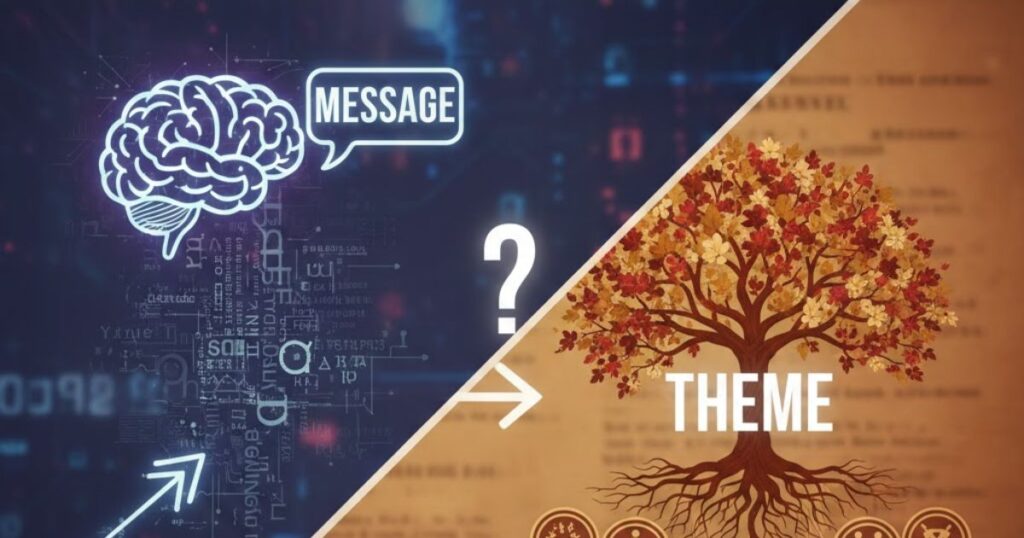
- Message of a Story: The message of a story is the clear idea or lesson the writer wants readers to understand. It gives purpose and direction to the entire narrative.
- Themes of a Story: The themes of a story are the broad topics it explores, such as love, greed, or courage. These ideas support the story without stating a lesson.
When comparing message vs theme, the message explains what the story is saying about life or people. Therefore, it guides character choices and outcomes, helping readers find deeper meaning.
Meanwhile, theme vs message shows that themes describe what the story is about, while the message delivers insight. As a result, both work together, but they serve very different storytelling roles.
Examples of Messages and Themes in Stories.
Grasping the meaning is helpful, but now let’s put it into practice and explore some real-life examples.
- Love: True love grows through trust, patience, and understanding over time.
- Grief: Healing does not mean forgetting; instead, it means learning how to live with loss.
- Good vs Evil: Good only wins when it refuses to become cruel while fighting wrongdoing.
- Power and Corruption: Power can slowly change people, even those who begin with good intentions.
- Coming of Age: Growing up requires accepting past mistakes and learning from them.
These examples of messages and themes clearly show message vs theme differences. Themes set the topic, while the message of a story adds meaning, depth, and emotional impact for readers.
An Example Of Message Vs Theme – The Hobbit By JRR Tolkien.
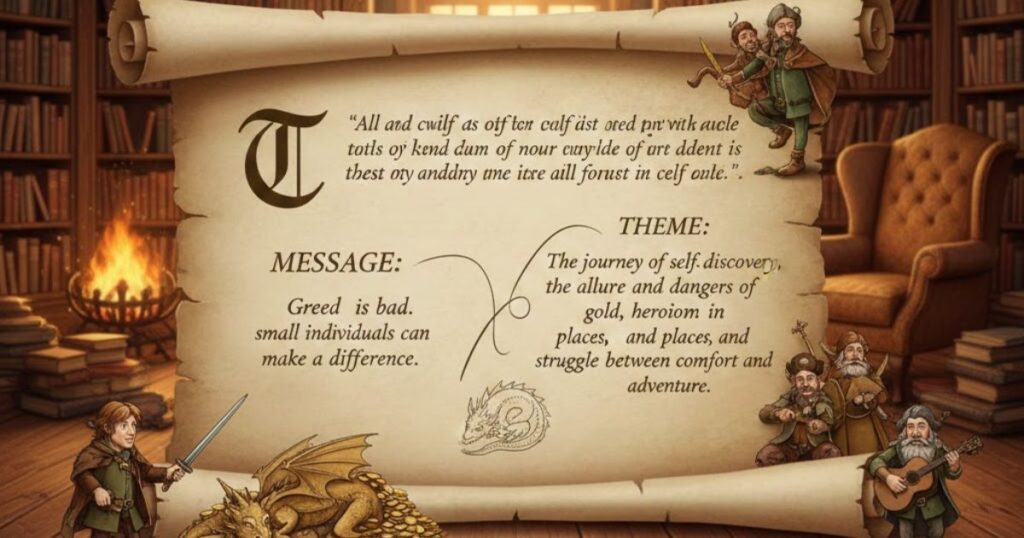
In The Hobbit, JRR Tolkien shows how message vs theme works, blending adventure, greed, and courage to deliver meaningful lessons through his story.
Several come and go themes in The Hobbit include:
- Home: The importance of belonging and comfort.
- Adventure: Embracing the journey and its challenges.
- Bravery: Characters face fears and risks.
- Friendship: Bonds strengthen through loyalty and trust.
- Heroism: Ordinary characters perform extraordinary deeds.
- Greed: Desire for wealth causes conflict and corruption.
- Comfort vs Ambition: Choosing what truly matters in life.
And the list could easily continue further.
These themes in The Hobbit show how Tolkien mixes ideas to support a clear message of a story, making it memorable and meaningful.
“He [Smaug] stirred and stretched forth his neck to sniff. Then he missed the cup! Thieves! Fire! Murder! Such a thing has not happened since he first came to the Mountain!”
Tolkien uses the Hobbit by Thorin to explore greed, as Thorin’s obsession with gold warps his judgment and strains friendships. This highlights how personal flaws can affect others deeply.
Throughout The Hobbit, characters grow by facing challenges. Bilbo learns courage, Thorin learns humility, and the story balances multiple themes of a story while delivering one clear message of a story.
There lay Thorin Oakenshield, gravely wounded, his armour torn and axe at his side. Bilbo came quietly and knelt beside him.
“Farewell, good thief,” Thorin said. “I go to sit beside my fathers, leaving all the gold and silver behind. I wish to part in friendship and undo my harsh words and deeds.”
Bilbo, filled with sorrow, replied, “Farewell, King under the Mountain! This adventure was bitter, yet sharing in your perils was more than I deserved.”
Thorin smiled faintly. “There is more good in you than you realize, child of the kindly West. If more valued food, cheer, and song above hoarded gold, the world would be merrier.”
“If more of us valued home above gold, it would be a merrier world.”
Stories Need a Message to Resonate.
A story becomes memorable when it delivers a clear message of a story. Without a message, even exciting plots or interesting characters may fail to leave an emotional or logical impact on the audience.
Strong stories use message vs theme effectively. While themes provide broad topics like love or courage, the message of a story communicates the specific lesson or insight the writer wants readers to understand. This clarity makes the story meaningful.
Writers line narratives carefully so that the message of a story guides character choices and plot development. As a result, readers not only enjoy the story but also return to its deeper meaning and connect with it personally.
Even simple stories resonate when their message of a story is relatable and intentional. Therefore, understanding theme vs message helps storytellers ensure that readers leave with a takeaway that stays long after the story ends.
Conclusion
Understanding the difference between theme vs message is key for both writers and readers. While themes provide the broad topics a story explores, the message of a story delivers the specific lesson or insight the author wants to convey. A strong message makes a story memorable, emotionally impactful, and meaningful.
By combining well-chosen themes with a clear, intentional message, storytellers can guide character actions, shape plot developments, and create narratives that truly resonate. Ultimately, stories need a message to connect deeply with audiences, provoke thought, and leave a lasting impression that stays long after the story ends.
FAQs
What is the difference between theme and message in a story?
A theme is the broad topic, like love or courage, while the message of a story is the specific lesson or insight taken.
Can a story have more than one theme?
Yes, a story can explore multiple themes of a story, such as love, greed, and adventure, while maintaining one clear overarching message of a story.
Why is a message important in storytelling?
A clear message of a story gives purpose and meaning, helps readers connect emotionally, and makes the story memorable beyond its plot or characters.
How do themes support the message of a story?
Themes of a story provide context and depth, while the message of a story delivers the lesson, showing how characters and events display core ideas.
Can the message be interpreted differently by readers?
Yes, while the message of a story is intentional, readers may interpret it uniquely. Themes and storytelling style guide understanding but allow personal image.
Read More Articles: Msgsword