
Command of the Message helps sales teams explain their product’s value clearly. Instead of just listing features, it focuses on real business results that matter to buyers. This approach makes complex B2B sales easier and more helpful.
Using this framework, sales reps connect solutions to visible outcomes. They understand each buyer’s challenges and weight, turning objections into opportunities. By showing the impact on revenue, order, and risk, teams close deals faster and with higher confidence.
This guide shows how the Command of the Message sales methodology improves every stage of selling. From discovery to competitive positioning, it provides a shape, repeatable way to communicate value, align teams, and win more complex deals in today’s B2B environment.
What is Command of the Message, and why does it work?
Command of the Message is a sales methodology from Force Management that helps teams explain product value in terms of real business outcomes. Instead of listing features, reps focus on results that matter to B2B buyers.
This framework works because most deals involve multiple members. By using discovery understanding, sales reps address each decision-maker’s pain points, turn objections into opportunities, and communicate differentiation that highlights business impact rather than technical features.
By applying the Command of the Message framework, teams shorten sales cycles and improve win rates. The methodology builds an in line value messaging approach, allowing reps to charge premium pricing while confidently guiding buyers to clear, visible outcomes.
How the Command of the Message improves B2B sales performance

The Command of the Message sales methodology helps B2B teams focus on outcomes that matter most. By using a value messaging framework, reps connect solutions to business impact, improving clarity and decision-making for buyers.
This approach transforms complex sales into easy to use conversations. Teams communicate differentiation usefully, address multiple members, and build trust, resulting in faster qualification, shorter sales cycles, and higher win rates across the group.
- Faster Qualification Decisions: Sales reps quickly identify opportunities by matching prospect requirements to solution capabilities. Early clarity avoids wasted time and ensures only high-value deals with proper profit potential move forward.
- Shortened Sales Cycles: Focusing on business outcomes helps prospects navigate decisions confidently. Reps reduce ambiguity, guiding buyers through the pipeline efficiently and speeding up deal closure without unnecessary delays.
- Improved Competitive Positioning: By emphasizing business impact over features, teams counter competitors effectively. Highlighting unique value makes alternatives less relevant, strengthening the organization’s market position and customer trust.
- Higher Win Rates on Complex Deals: Teams handle multiple decision-makers strategically, addressing each stakeholder’s priorities. This targeted approach simplifies complicated sales, increasing the likelihood of closing deals and building long-term customer relationships.
- Improved Forecast Accuracy: Standardized qualification criteria give leaders a clear view of deal quality. Tracking metrics like pipeline progress, adoption rate, and projected outcomes ensures more accurate forecasts for strategic planning.
6 pillars of the Command of the Message sales methodology

The Command of the Message framework is built on six pillars that guide sales teams to communicate value usefully. These pillars create an in line approach, helping reps address buyer challenges and close complex B2B deals.
By following these six pillars, teams align messaging across marketing, product, and sales, focus on outcomes rather than features, and differentiate their solutions. This order approach builds up customer trust and improves overall sales performance.
1. Deep customer understanding: Know your buyer inside and out
Deep customer understanding is the first pillar of the Command of the Message framework. Sales teams must know each buyer’s needs, challenges, and goals to connect solutions to meaningful business outcomes.
Understanding your buyer means going beyond titles or industries. Teams explore pain points, motivations, and priorities, allowing reps to customize value messaging. This approach builds trust and improves sales engagement.
By knowing what keeps buyers up at night, reps can shift conversations from product features to real impact. Addressing key members’ concerns makes solutions more relevant and strong.
- Create buyer personas with goals, responsibilities, and success metrics
- Use MEDDIC to identify metrics, buyers, pain points, and decision process
- Analyze value drivers like revenue impact, costs, risks, and strategy
- Ask discovery questions to uncover challenges and opportunities
Sales reps should combine qualitative and quantitative insights to fully understand buyers. Observing behaviors, preferences, and feedback ensures value messaging aligns with both current and future business objectives.
Effective customer understanding allows reps to bank on objections and highlight solutions’ impact on order, revenue, and risk easing. This makes sales conversations more targeted, confident, and outcome-focused.
Teams must continuously update their knowledge about buyers. Market trends, company drive, and industry challenges evolve, so staying informed check messaging stays relevant and sound with all decision-makers.
- Track buyer interactions in CRM for future insights
- Segment buyers by role for tailored messaging
- Share real-world examples to show value
- Align solutions with corporate objectives
For example: Instead of saying, “Our software automates reports,” a rep can say, “We free up 15 hours weekly by automating banking reporting, giving your CFO more time for clever planning and decision-making.”
Deep customer understanding transforms sales conversations. By knowing buyer priorities and challenges, reps connect solutions to real business outcomes, build trust, and grow win rates in complex B2B deals.
2. A clear, compelling, and repeatable value proposition
A strong value proposition helps sales teams show why buyers should choose their solution. By clearly linking product power to business outcomes, reps create messages that are simple, repeatable, and sound with B2B decision-makers.
Instead of listing technical features, a forceful value proposition explains how solutions drive revenue growth, order, or risk reduction. This approach builds confidence with prospects and positions reps as trusted business advisors rather than product sellers.
Reps must practice delivering the core message in seconds. Elevator pitches and concise sales messaging frameworks allow teams to highlight differentiation quickly, address objections, and check every conversation to hold up the unique value of the solution.
A repeatable value proposition acts as a decision-making guide for buyers. By answering “Why change now?” and “Why us?”sales reps always communicate outcomes, build up competitive positioning, and simplify complex B2B sales discussions.
3. Organization-wide message alignment

Organization-wide message alignment ensures marketing, product, and sales teams share a in line value messaging framework, helping reps communicate differentiation usefully and providing buyers a smooth, unified experience from first contact to purchase.
- Marketing as Market Listener: Marketing teams identify shifting customer needs, capture the “why change” story, and create messaging frameworks that guide sales and product teams in delivering consistent value.
- Product Translates Insights: Product teams convert customer insights into solution designs addressing real pain points, ensuring all claims are accurate, credible, and aligned with the value proposition.
- Sales Delivers Personalized Value: Sales reps adapt the core message to each prospect’s context while keeping differentiation consistent, creating conversations that feel relevant without weakening the overall brand story.
Aligned messaging across teams builds trust, builds up competitive positioning, and check buyers always understand your solution’s real business value.
4. Selling outcomes, not just the product’s features
Sales reps should focus on business outcomes by choice of just features. By connecting solutions to profit growth, operational order, and risk reduction, teams show buyers the real value impact, building trust and status.
This approach positions reps as consultative advisors. By spotting customer challenges and projecting visible results, they guide buyers to understand how solutions solve problems, shorten sales cycles, and create long-term business benefits.
This change in thinking changes how discussions progress by linking product features to clear, true results that matter to the business:
| Revenue acceleration | Show exactly how your solution helps customers: Capture new market segments, Increase the customer lifetime value, Shorten sales cycles |
| Operational efficiency | Quantify improvements in: Resource allocation and utilization, Process automation and time savings, Quality and accuracy metrics |
| Risk mitigation | Demonstrate reduction in: Compliance exposure, Security vulnerabilities, Market position threats |
Selling outcomes check buyers see real benefits of your solution. Reps focus on what truly matters, like order, profit, and risk mitigation, creating impactful conversations that grow win rates and build up customer relationships.
5. Competitive differentiation without direct comparisons
Sales teams should focus on value-based differentiation by choice of comparing features. By highlighting unique benefits, reps show business impact that matters most to B2B buyers, making players less relevant.
This approach positions your solution as the clear choice. By pointing out outcomes and head, teams improve competitive positioning, build trust, and guide hope to see visible benefits over options.
Differentiation without direct comparison avoids conflict and builds status. By focusing on customer weight, reps can confidently signal why their solution drives better results than generic options.
The strategy centers on these differentiation tactics:
- Value-based positioning: Emphasize areas where you deliver:
- Faster time-to-value compared to alternatives
- More comprehensive solutions addressing specific business challenges
- Unique approaches competitors cannot replicate
- Customer-validated strengths: Let results speak louder than claims through:
- Metrics from similar customer implementations demonstrating success
- Testimonials highlighting resolved pain points
- Third-party awards or analyst recognition validating performance
Focusing on value-based differentiation helps sales reps showcase visible business outcomes while avoiding direct balancing. Using customer-validated proof builds trust, builds credibility, and makes solutions more compelling to decision-makers in complex B2B deals.
6. Value-based sales conversations rooted in discovery
Effective sales conversations start with discovery. By asking the right typical questions, reps uncover the real challenges behind surface-level complaints, allowing them to connect solutions to visible business outcomes that matter to buyers.
Discovery-driven conversations reveal hidden risks and weight. Using contrast and future-state questions, reps guide buyers to see the result of inaction and how solutions can improve order, revenue, and risk easing.
This approach positions reps as trusted advisors. By listening carefully and responding with tailored insights, they build credibility, build up customer relationships, and hold multiple members usefully during complex B2B deals.
Effective discovery hinges on these questioning techniques:
- Diagnostic Questions: Ask questions that reveal business impact, such as “How is this challenge affecting your quarterly targets?”
- Contrast Questions: Highlight consequences by asking, “What happens if this issue continues for another six months?”
- Future-State Questions: Build a vision with, “If we solved this completely, what opportunities would become possible?”
Discovery-based, value-focused conversations help reps identify real challenges, show visible outcomes, and build trust, making solutions relevant and grow win rates in complex B2B sales
5 steps to embed Command of the Message into your entire organization
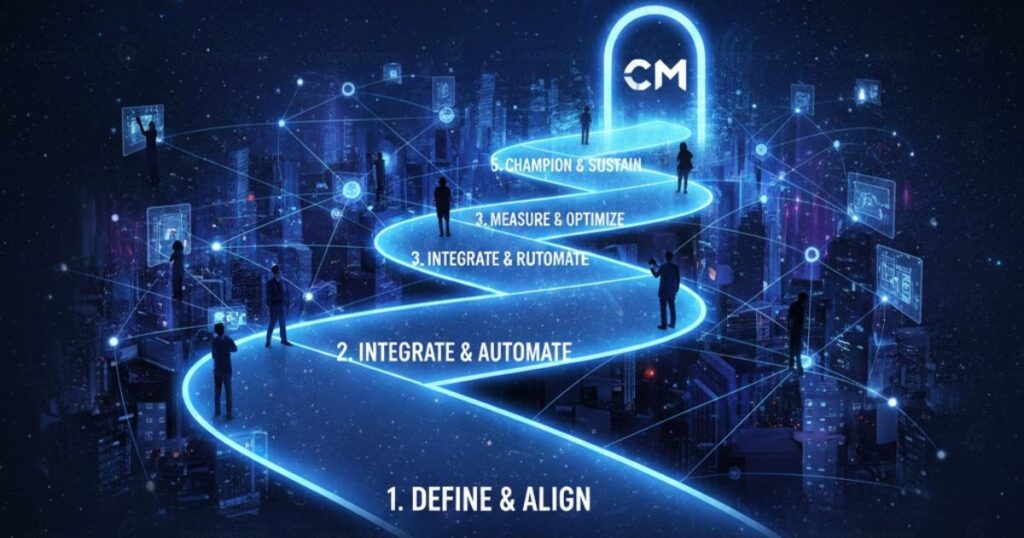
Implementing Command of the Message requires more than knowledge; it needs organization-wide adoption. Teams must align on value messaging, integrate frameworks into daily workflows, and always reinforce principles to improve B2B sales performance.
By following order steps, companies secure head buy-in, train reps effectively, create messaging playbooks, measure results, and embed the methodology into sales culture, check long-term success and stronger customer outcomes.
1. Get executive buy-in
Securing executive buy-in check Command of the Message becomes a priority. Leadership support drives in tune adoption and reinforces value messaging across the entire B2B sales organization.
Without executive backing, the methodology remains pure. Leaders modeling the approach motivate teams, build up sales culture, and show commitment to outcome-focused selling.
Open by presenting the business value in terms head understand and sort:
- Show Revenue Impact: Present how consistent value messaging shortens sales cycles and improves win rates against competitors.
- Highlight Customer Retention: Demonstrate how aligned messaging increases customer satisfaction and strengthens long-term relationships.
- Emphasize New Hire Productivity: Explain how structured frameworks reduce ramp-up time and help new reps adopt sales methodology faster.
Getting executive buy-in is critical for successful Command of the Message adoption. Leadership support drives team engagement, reinforces in line value communication, and checks the methodology becomes part of the company’s long-term sales strategy.
2. Develop a comprehensive training program for sales teams
Even the best sales methodology fails if the team doesn’t fully embrace it.
The solution? Training that really works.
Start with interactive workshops that show sales reps how to apply skills in real situations.
- Conduct workshops to teach reps how to articulate value propositions tied to business outcomes
- Practice objection handling and competitive positioning using real-world scenarios
- Integrate the methodology into CRM, call templates, and deal review processes
A complete training program ensures sales reps internalize the Command of the Message framework. By combining workshops, role-playing, and practical tools, teams gain confidence, deliver in line value messaging, and improve B2B sales performance across the organization.
Effective training reinforces the methodology daily. Weekly practice, feedback sessions, and CRM blending help reps apply value messaging in real conversations, shorten sales cycles, handle objections confidently, and achieve visible business outcomes for both customers and the company.
3. Create a messaging framework and playbook

A well-designed messaging framework and playbook helps sales reps deliver in line value messaging, members conversations, and connect solutions to business outcomes, making B2B sales more likely and effective.
1. Value Matrices:
Value matrices link product capabilities to business outcomes, helping reps file solutions based on impact. This check sales messaging highlights what matters most to each prospect and member.
Example: Instead of saying, “Our tool automates reports,” say, “We cut manual reporting by 40%, freeing analysts for higher-value tasks and strategic planning.”
2. Conversation Blueprints:
Conversation blueprints structure calls without rigid scripts, guiding reps through discovery, solution presentation, and objection handling. They check each stage connecting customer pain points to visible business results.
Example: Early-stage call question: “What’s slowing down your sales cycle?” surfaces pain points before introducing automation capabilities.
3. Qualification Criteria:
Qualification criteria standardize how reps assess leads using Command of the Message principles, focusing on budget, timeline, and decision-making processes, by choice of relying on second sight or guesswork.
Example: Checklist: “Does the prospect have a defined budget, timeline, and identified decision-makers?” ensures deals meet profitability and strategic fit requirements.
Creating a messaging framework and playbook equips reps to communicate always, prioritize opportunities, and tailor conversations. By linking solutions to business outcomes, teams grow win rates, shorten sales cycles, and build up B2B customer relationships.
4. Measure, analyze, and optimize performance
You cannot add to what isn’t tracked regularly, monitor, evaluate, and adjust your approach.
Build a dashboard to follow key performance metrics, ensuring insights guide continuous improvement.
Win Rates & Deal Size:
Compare closed deals before and after adoption to measure impact.
Example: Average deal size increased 15% after training.
Time to Conversion:
Measure how quickly opportunities move through the pipeline.
Example: Deals closed faster, reducing the cycle from 90 to 60 days.
Pipeline Velocity:
Analyze how quickly opportunities progress across stages.
Example: Opportunities stalled less at proposal stage due to better objection handling.
Seller Confidence Score:
Gather qualitative feedback on rep confidence using the methodology.
Example: Quarterly survey shows average confidence 8/10.
Don’t rely only on metrics. Collect qualitative insights by reviewing feedback from reps and customers regularly.
- Track adoption to ensure reps consistently use value messaging
- Monitor key metrics like deal size, win rate, and pipeline velocity
- Collect qualitative feedback to refine sales conversations and improve B2B outcomes
Measuring, analyzing, and optimizing performance ensures Command of the Message drives real results. Teams improve adoption, deal outcomes, and confidence, making B2B sales more likely and value-focused.
5. Embed it into your culture
Embedding Command of the Message into your culture checks the methodology becomes second nature. Teams share customer insights, reinforce value messaging, and always apply principles across every B2B sales conversation.
Creating dedicated channels for reps to post voice-of-customer feedback helps validate messaging. Teams learn from real examples, adapt strategies, and build up customer relationships through shared knowledge and concert.
Recognition drives behavior. Highlight wins where reps effectively use the framework to overcome objections, beat competitors, or show business outcomes, uplifting adoption and reinforcing a value-focused sales culture.
When embedded into daily routines, Command of the Message transforms selling into winning. Reps confidently communicate differentiation, connect solutions to real outcomes, and build lasting trust with decision-makers.
Ready to put Command of the Message into action?

Ready to put Command of the Message into action? Success comes when teams apply value messaging always. With the right tools and mindset, sales reps clearly meet up with business outcomes and confidently guide buyers through complex B2B decisions.
Using Qwilr, teams can: create united proposals, track engagement, and communicate value clearly to every member.
- Create proposals that highlight differentiation and real business impact
- Customize messaging for each stakeholder without losing core value
- Track buyer engagement to understand what matters most
Using tools that support the Command of the Message framework helps teams turn plan into killing. Clear, visual, and united content keeps buyers focused on outcomes, not features.
When sales teams align messaging, tools, and culture, they command the message in every united. This approach builds trust, shortens sales cycles, and drives stronger B2B sales performance.
Conclusion
Command of the Message transforms how B2B sales teams communicate value. By focusing on outcomes instead of features, reps connect solutions to real business needs. The framework creates clarity, alignment, and unity across marketing, product, and sales teams. Through strong discovery, clear value ideas, and competitive differentiation, sellers build trust with multiple members.
Training, sizing, and cultural adoption ensure the methodology delivers long-term results. When teams truly command the message, sales conversations become more confident and buyer-focused. As a result, organizations shorten sales cycles, grow win rates, and drive meaningful, visible business outcomes that support acceptable growth.
FAQs
What is Command of the Message in sales?
Command of the Message is a sales methodology that helps teams explain value through business outcomes instead of mark, making complex B2B sales clearer and more effective.
Why does Command of the Message work in B2B sales?
It works because it focuses on buyer weight, addresses multiple members, and connects solutions to visible results, helping buyers make confident and informed decisions.
How does Command of the Message improve sales performance?
It improves performance by shortening sales cycles, increasing win rates, building up differentiation, and creating in line value messaging across the entire sales organization.
Who should use the Command of the Message framework?
B2B sales teams, sales leaders, marketers, and product teams benefit from this framework when selling complex solutions to multiple decision-makers.
How can companies successfully implement Command of the Message?
Companies succeed by gaining head buy-in, training teams, creating messaging playbooks, tracking performance metrics, and setting the methodology into their sales culture.
Read More Articles: Msgsword