One-time passcodes, or OTPs, are special codes that help keep your online accounts safe. They are usually sent to your phone or email whenever you try to sign up or log in. Each code is unique and can only be used once, which makes them more secure than regular passwords.
OTPs work by verifying your identity. When you enter an OTP, the system checks that you are the real account owner. This extra step prevents hackers from reading your account, even if they know your password. It is a simple way to add strong security without mixing up the login process.
There are different types of OTPs. Some come as SMS messages, others as email codes, or even through apps like WhatsApp. No matter the method, the goal is the same: to give you a quick, safe way to confirm your identity and protect your information.
What are OTPs, exactly?
OTPs, or one-time passcodes, are security codes sent to a user’s phone number or email address to verify identity. They are randomly generated and can only be used once, making them more secure than traditional passwords and protecting accounts from hackers.
These OTP messages are part of authentication flows in apps and websites. Users enter the code to confirm their identity, allowing access to sensitive actions or account features. This passwordless authentication method improves both security and user experience without extra hassle.
What are different types of OTPs?
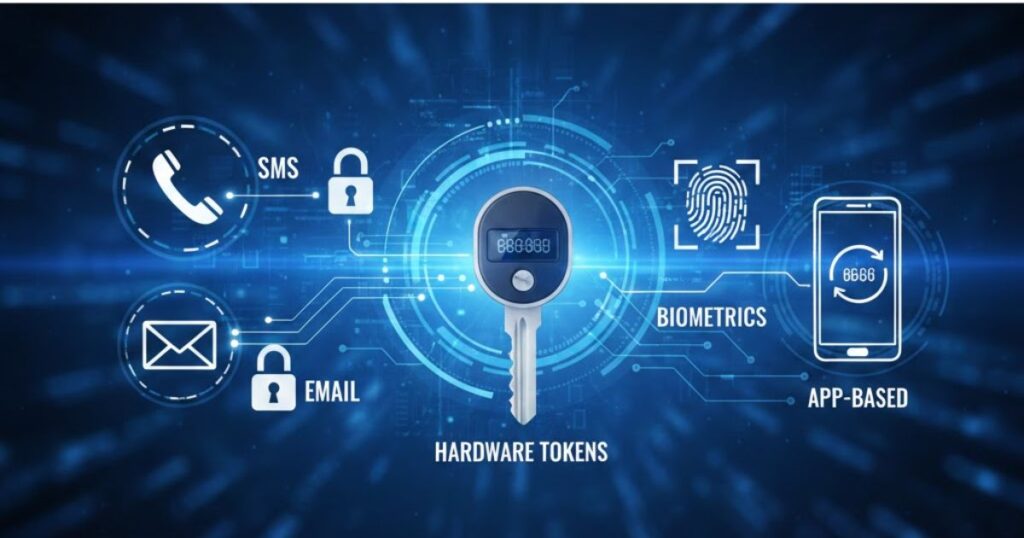
There are several types of OTPs, including email OTPs, SMS OTPs, and WhatsApp OTPs. Each OTP message is sent securely to a user’s phone or email, ensuring passwordless authentication and strong account security.
Email one-time passcodes
Email OTPs are one-time passcodes sent directly to a user’s registered email address. They allow passwordless authentication, allowing users to verify identity quickly and securely without relying on traditional passwords.
SMS one-time passcodes
SMS OTPs are one-time passcodes sent via text messages to a user’s registered phone number. They provide passwordless authentication, helping users verify identity quickly while keeping accounts secure.
WhatsApp one-time passcodes
WhatsApp OTPs are one-time passcodes sent through the WhatsApp messaging app to a user’s registered phone number. They provide passwordless authentication and secure verification, especially for global users, while fighting off SMS delivery issues and allowing quick, safe identity confirmation across apps and websites.
How do OTPs work?
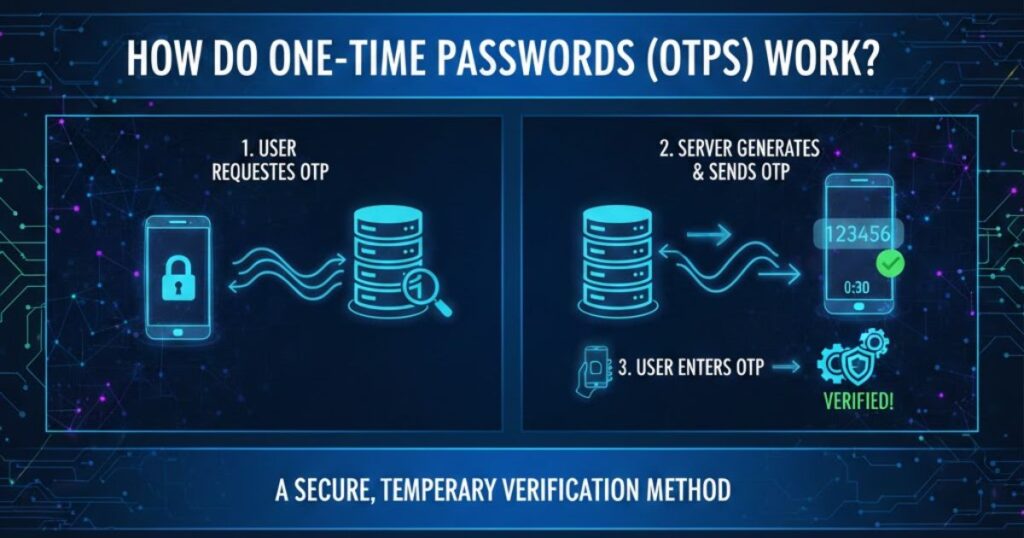
OTPs work by sending a one-time passcode to a user’s phone or email, allowing passwordless authentication. Users enter the OTP message to verify identity, and the code is then validated and stopped for security.
In real use, OTPs usually follow a straightforward sequence of steps.
- A user initiates sign up or login, triggering an OTP request.
- The server generates a unique code and sends it via SMS, email, or WhatsApp.
- The user receives the OTP message and enters the code into the app or website.
- The system validates the OTP, confirming the user’s identity.
- Once used, the OTP is invalidated, preventing reuse and enhancing account security.
Using OTPs in an MFA flow
OTPs are often used as part of multi-factor authentication (MFA) to improve account security. They can work alone or alongside other authentication factors like passwords, biometrics, or OAuth logins, giving users safer access to apps or websites.
By including OTPs in an MFA flow, developers can add extra layers of protection for sensitive actions. For example, users may need to enter an OTP message when updating payment details or completing important transactions, ensuring their identity is confirmed.
Furthermore, MFA with OTPs can be put in flexibly. Developers can front-load authentication at login or use route-based verification, advise additional OTP verification only for high-risk actions, reducing friction while keeping accounts secure.
How are OTPs different from traditional passwords?
OTPs are passwordless authentication codes that are unique and valid for only one login try. Unlike traditional passwords, they cannot be rated, reused, or repeated, which makes accounts more secure against hackers.
Additionally, OTPs improve the user experience by removing the need to remember complex passwords. Users can quickly enter the OTP message sent to their phone or email, reducing login stress while maintaining strong identity verification and account protection.
Stronger security
OTPs provide stronger account security than traditional passwords. Each one-time passcode is unique, randomly generated, and valid for a single login, making it harder for hackers to access accounts or perform credential-down attacks.
The login experience with OTPs is much smoother. In contrast to regular passwords, one-time passcodes:
- Cannot Be Predicted: Each OTP message is randomly generated, so users don’t rely on guessable information like birthdays or pet names. This reduces the risk of password attacks and enhances identity verification.
- Cannot Be Reused: Unlike static passwords, which remain valid until changed, OTPs expire after one use. This prevents hackers from reusing cut off codes, improving account protection across platforms.
- Resistant to Repetition Across Accounts: Many users reuse passwords for multiple accounts, putting all at risk. OTPs are platform-specific and one-time only, making passwordless authentication much safer for sensitive data.
OTPs offer robust security by being up in the air, temporary, and unique, which protects accounts from common laptop threats while maintaining user convenience and confidence.
Frictionless UX
OTPs improve the user experience by removing the need to remember complex passwords. Users receive OTP messages directly on their phone or email, making login and verification simple, fast, and secure.
Moreover, passwordless authentication with OTPs reduces login stress. Users can quickly enter the one-time passcode, avoid forgotten password issues, and complete actions smoothly, enhancing conversion rates and overall account joy.
Using OTPs makes the login process much easier. Compared to regular passwords, one-time passcodes offer a simpler, faster, and more convenient user experience.
- Accessible and Easy to Use OTP messages are short, usually 6–8 digits, and appear directly on a user’s phone or email. This simplicity ensures users can verify identity quickly without confusion.
- Automatic Fill Options Many apps and providers offer auto-fill power for OTPs, allowing users to enter codes without leaving the app. This seamless experience improves passwordless login and reduces frustration.
- Flexible Integration Across Platforms OTPs can be used as a primary or secondary factor in any authentication flow, fitting smoothly into apps or websites while keeping security strong and user experience frictionless.
OTPs create a smooth and simple login experience, reducing hassle while maintaining strong security for users across all devices and platforms.
Potential drawbacks of OTPs

Like other authentication methods, OTPs are not completely secure, even when they are used as a secondary factor within a multi-factor authentication (MFA) flow.
Although OTPs improve account security, they are not completely foolproof. Any authentication factor tied to a user’s phone number or email can be targeted by hackers, putting one-time passcodes at risk if devices or accounts are given and taken.
Moreover, OTP messages can be intercepted through methods like SIM swapping or phishing attacks. Hackers may trick users into sharing codes or clicking bitter links, which can lead to unauthorized access despite passwordless authentication.
Additionally, OTPs may introduce minor friction if a code stops too quickly. Users must act fast to enter the one-time passcode, which can be challenging during high-security flows or for those with slower device access.
What are TOTPs?
TOTPs, or time-based one-time passcodes, are an advanced form of OTPs used in multi-factor authentication (MFA). They are generated by authenticator apps like Google Authenticator, Microsoft Authenticator, or Authy, and change automatically every 30 or 60 seconds for added account security.
Unlike standard OTP messages, TOTPs are tied directly to a user’s device, not just a phone number or email. This makes them resistant to SIM trade and other attacks, ensuring passwordless authentication remains strong and secure across apps and websites.
However, TOTPs require users to act quickly. Since codes expire rapidly, users must enter the one-time passcode in time to access accounts. Despite this, TOTPs are ideal for high-risk actions, like bank transfers, careful company data, or fintech operations, to boost identity verification.
Key takeaway
OTPs provide secure, passwordless authentication for apps and websites. They are easy to use, protect accounts from hackers, and work usefully as primary or secondary factors in MFA flows, improving both security and user experience.
Discover Stytch’s OTPs and TOTPs
Stytch offers flexible OTPs and TOTPs to help developers add passwordless authentication and secure identity verification. These solutions simplify login flows while keeping user accounts safe across apps and websites.
Additionally, Stytch’s OTPs integrate with MFA flows, authenticator apps, and one-time passcode messages, providing strong account protection. Users can quickly verify identity, while developers maintain security, reduce friction, and add to overall user experience.
Conclusion
OTPs and TOTPs provide modern, passwordless authentication that keeps accounts secure while complicating the user experience. They prevent hackers from exploiting weak or reused passwords and add strong identity verification in both sign-up and login flows.
By integrating OTP messages via SMS, email, or WhatsApp and using authenticator apps, developers can create flexible MFA flows that protect sensitive actions without adding unnecessary friction. Overall, OTPs offer a reliable, easy-to-use solution for secure access, improving account safety, boosting user satisfaction, and brace digital security strategies.
FAQs
What are OTPs?
OTPs, or one-time passcodes, are unique codes sent via SMS, email, or messaging apps to verify identity and provide passwordless authentication for secure account access.
How do OTP messages work?
OTP messages deliver a one-time passcode to a user’s phone or email. Users enter the code to verify identity and complete login or sign-up flows.
What are the types of OTPs?
Common OTPs include email OTPs, SMS OTPs, and WhatsApp OTPs. Each provides passwordless authentication and ensures secure identity verification across different platforms.
How are OTPs used in MFA flows?
OTPs act as a secondary factor in multi-factor authentication (MFA), adding extra security and save accounts during high-risk actions or sensitive transactions.
What are TOTPs and why are they important?
TOTPs are time-based one-time passcodes generated by authenticator apps. They stop quickly, preventing SIM trade or interception, offering add to identity verification and account security.
Read More Articles: Msgsword