MMS messaging is a type of text message that lets you send more than just words. With MMS, you can share photos, videos, audio clips, and longer text in one message. It makes communication more visual and helps people understand messages faster and better.
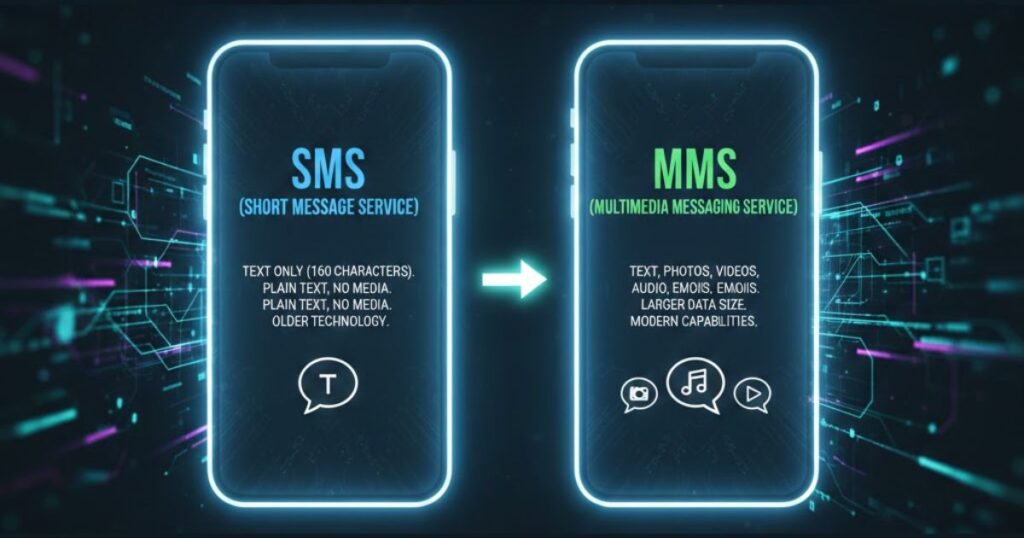
SMS, on the other hand, is limited to plain text only. It allows up to 160 characters in a single message and works well for short, direct updates. Because SMS is simple, it is widely supported on all mobile phones and usually costs less than MMS.
The main difference between MMS and SMS is the content they can carry. MMS adds images and media, while SMS sticks to text. Both use mobile networks, but MMS feels more engaging, especially for sharing detailed or visual information.
What is MMS messaging?
MMS messaging means Multimedia Messaging Service, a mobile texting method that lets people send more than plain words. It supports photos, videos, audio files, and emojis. As a result, messages feel more expressive and easier to understand.
Unlike basic texting, MMS messages allow longer text and rich media in one conversation. Because of this, mobile messaging becomes more engaging. Businesses often use MMS texting to share visual updates, reminders, and promotional content clearly.
Moreover, MMS messaging works through a cellular network and does not need internet-based apps. This makes multimedia text messages reliable and widely accessible. Overall, it offers a richer communication experience than standard text messaging.
Should I use SMS or MMS texting? Pros and cons
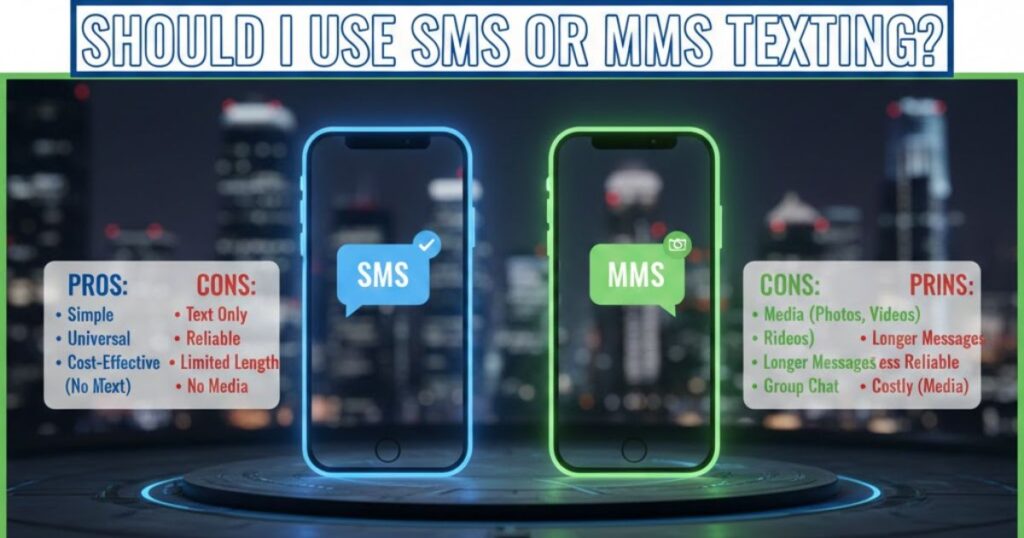
Choosing between SMS texting and MMS texting depends on your message goal. SMS messaging works best for short updates, alerts, and confirmations. It is affordable, fast, and supported on every mobile phone.
However, MMS messaging suits visual communication. Multimedia messages include images and videos, which boost engagement. Although MMS texting costs more, it helps businesses deliver clearer, more attractive messages.
What’s the difference between MMS vs SMS messages?
The main difference between MMS vs SMS messages is the type of content they support. SMS messages only send plain text and allow up to 160 characters. Because of this, SMS messaging works best for short alerts, reminders, and quick updates.
In contrast, MMS messages support rich media like photos, videos, GIFs, and audio files. With MMS messaging, you can also send longer text in one message. This makes multimedia messaging more engaging and easier to understand.
Another key difference between SMS vs MMS is cost and impact. SMS texting is usually cheaper and ideal for large audiences. However, MMS texting delivers higher engagement by adding visuals that capture attention and improve response rates.
How are MMS and SMS similar?
MMS and SMS messaging share the same core technology and both work through a cellular network. Because of this, users can receive text messages without installing apps or relying on Wi-Fi or mobile data connections.
Additionally, SMS messaging and MMS messaging reach almost every mobile phone worldwide. Both support two-way communication, making them reliable for personal texts, customer updates, alerts, and important business messaging.
SMS vs MMS: What about price?
When comparing SMS vs MMS price, SMS messaging is usually more affordable. Because SMS texts only contain plain text, they use less data. This makes SMS texting a cost-effective option for large-scale messages.
In contrast, MMS messaging often costs more to send. MMS texts include images, videos, or audio files, which require more data. As a result, multimedia messages carry higher per-message charges.
However, MMS vs SMS cost should match your goal. While MMS texting costs more, it often delivers higher engagement. Strong visuals can increase clicks and conversions, helping businesses justify the extra messaging expense.
SMS and MMS messaging vs. iMessage, WhatsApp, and other OTT channels
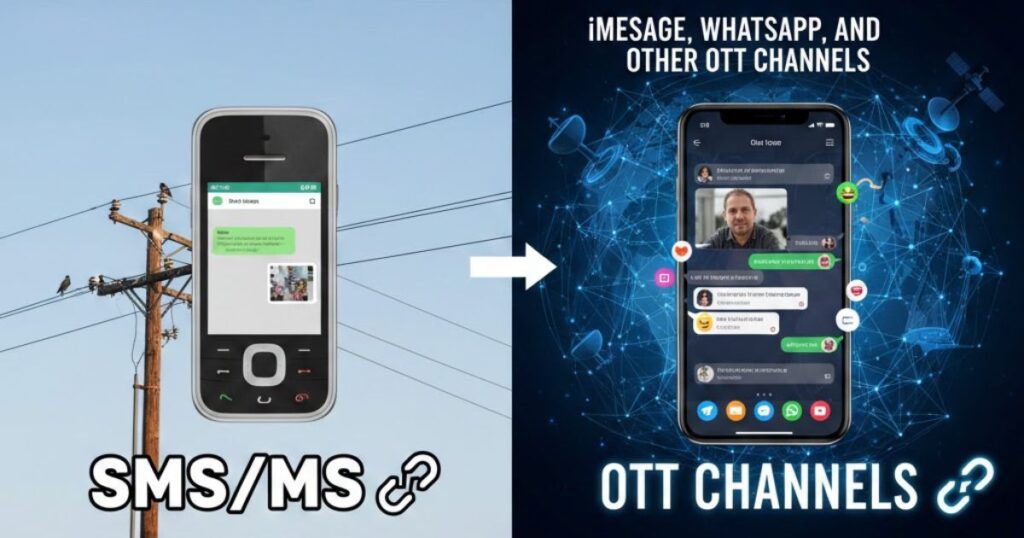
SMS and MMS messaging work directly through a mobile network, so users can receive messages without internet access. Because of this, SMS texting and MMS messaging reach almost every mobile phone, making them reliable for alerts and business communication.
In comparison, OTT messaging apps like iMessage and WhatsApp need Wi-Fi or mobile data. They offer rich features like voice calls and media sharing, but their reach depends on app installation and device compatibility.
SMS and MMS messages can be delivered to anyone who owns a mobile phone, offering complete coverage. In contrast, OTT messaging platforms have restricted reach because users must install specific apps.
- SMS and MMS provide universal reach and work without the internet, ensuring message delivery.
- iMessage and WhatsApp offer advanced features but rely on data and specific apps.
Overall, SMS vs OTT messaging comes down to reach versus features. SMS and MMS messaging ensure accessibility, while OTT channels deliver richer experiences when internet connectivity is available.
| SMS | MMS | iMessage | ||
| Reach | 100% of mobile phone users (7.4 billion people) | 100% of mobile phone users | iOS (Apple) users (1.8 billion users) | WhatsApp users (3 billion active users) |
| Connectivity | Rely on mobile network, so users can receive text-only messages without a data plan | Rely on mobile network, so users can receive messages without a data plan | Rely on cell network or Wi-Fi, so users need a cellular data plan and an app to receive messages | Rely on cell network, Wi-Fi, so users need a cellular data plan and an app to receive messages |
| Capabilities | Written text (160 characters) | Written text, videos, pdfs, audio files, and photos | Written text, videos, photos, voice and video calling, group messaging, gifs, product catalogues, and other multimedia sharing | Written text, videos, photos, voice and video calling, group messaging and other multimedia sharing |
5 MMS messaging tips
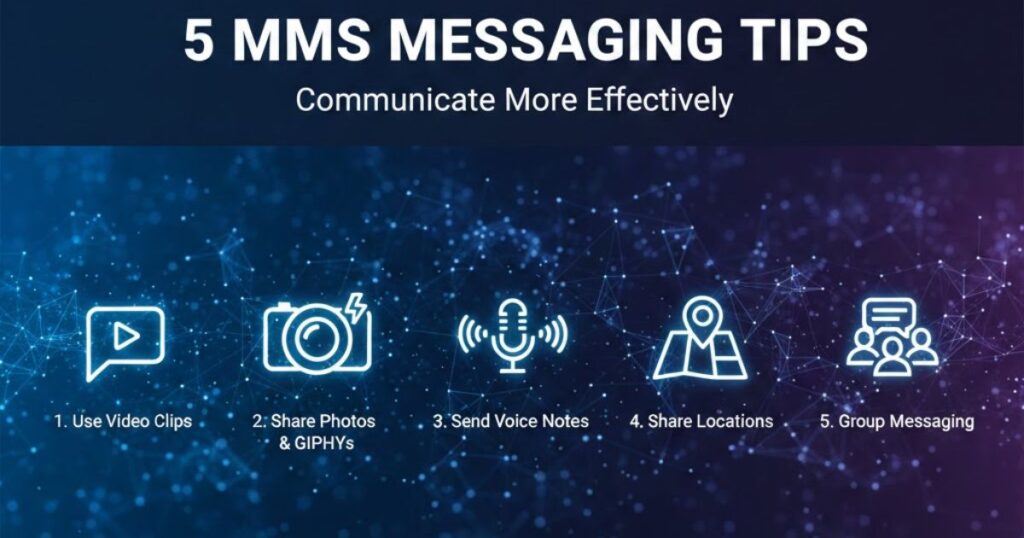
MMS messaging tips can help your messages stand out and engage customers better. First, make your messages memorable by including images, videos, or GIFs. Visual content grabs attention and helps recipients remember your information longer compared to plain SMS texting.
Second, focus on building strong customer relationships. Use MMS texting to send personalized updates, promotional offers, or appointment reminders. Because multimedia messages allow two-way communication, customers can respond directly, improving engagement and trust in your brand.
Finally, personalize your messages to make them relevant. MMS messaging allows you to add images, videos, and text tailored to individual preferences. By combining rich media with personalized content, businesses can increase clicks, conversions, and overall customer satisfaction.
1. Make messages hard to forget
To make messages hard to forget, include images, videos, or GIFs in your MMS messaging. Visual content grabs attention quickly and helps customers remember your information much longer than plain SMS texting.
Additionally, pairing multimedia messages with clear text enhances understanding. When people see relevant visuals alongside your message, they are more likely to act, improving engagement and making your mobile messaging campaigns more effective.
2. Build relationships that last
Using MMS messaging helps you build relationships that last by creating more engaging conversations. Unlike plain SMS texting, multimedia messages allow you to share images, videos, and audio, making interactions feel personal and meaningful.
Moreover, MMS texting supports two-way communication. Customers can reply directly to messages, ask questions, or provide feedback. This interaction strengthens trust and loyalty, showing that your business values their input and experience.
By sending personalized multimedia messages, you make customers feel recognized. Whether it’s a special offer, appointment reminder, or thank-you note, MMS messaging enhances the connection beyond standard text, making your communications more memorable.
Finally, combining SMS and MMS in your strategy ensures everyone receives messages. If a device doesn’t support MMS, a fallback SMS text guarantees delivery, maintaining strong relationships without missing important updates or promotions.
3. Subject them to all the feels
With MMS messaging, you can subject them to all the feels by adding emotional impact through images, videos, and GIFs. Multimedia messages make your content more engaging and help customers connect with your brand instantly.
Additionally, including a compelling subject line in your MMS texting grabs attention and encourages recipients to open messages. Combining visuals with thoughtful text strengthens emotional connection, increases engagement, and makes your mobile messaging campaigns more effective.
4. Personalize all the things
Personalize all the things by using MMS messaging to send content tailored to each customer. Multimedia messages with images, videos, or GIFs relevant to their interests make communication feel more thoughtful and engaging.
Moreover, combining personalization with clear SMS texting or fallback messages ensures every recipient receives relevant updates. MMS texting allows brands to include dynamic content, enhancing customer experience and encouraging interaction.
Finally, personalized multimedia messages can boost loyalty and drive conversions. By understanding customer preferences and sending targeted MMS messages, businesses can make promotions, reminders, and offers more meaningful and effective.
5. Rely on SMS for fallback
Even with MMS messaging, not all devices support multimedia content. By using SMS texting as a fallback, you ensure every customer receives your message, keeping communication reliable and consistent across all mobile devices.
Additionally, a fallback SMS can include a dynamic link to view the original multimedia message. This approach maintains engagement, ensures delivery, and allows your mobile messaging campaigns to reach every recipient without losing impact.
MMS messaging examples for businesses

MMS messaging for businesses helps brands engage customers with rich media content. Companies can send promotional images, videos, and personalized offers to showcase products, announce sales, or share special events, making messages more attractive than plain SMS texting.
Moreover, businesses use MMS texting for practical updates like appointment reminders, delivery confirmations, and digital receipts. By combining text with visuals, multimedia messages improve clarity, reduce confusion, and create a professional, engaging experience for every customer.
Here are some popular ways businesses can use MMS messaging effectively.
Marketing and promotions
Marketing and promotions benefit greatly from MMS messaging. Brands can share high-quality images, videos, and GIFs to highlight products, announce sales, or launch new items. Multimedia messages make promotions more engaging than plain SMS texting.
Moreover, MMS texting allows businesses to create visually appealing campaigns that capture attention. By including clear calls-to-action, customers are more likely to click links, visit websites, or make purchases. Mobile messaging becomes a powerful tool to drive conversions.
Finally, combining SMS and MMS messaging ensures broader reach. While MMS messages engage visually, SMS fallback texts guarantee every recipient receives key promotional information, improving overall campaign effectiveness and customer satisfaction.
Sending appointment reminders or delivery confirmations
MMS messaging is perfect for sending appointment reminders or delivery confirmations. Including images, maps, or instructions makes messages clearer and helps customers remember important details better than plain SMS texting.
Additionally, multimedia messages provide visual proof of deliveries or service locations. By using MMS texting, businesses can reduce confusion, improve customer satisfaction, and ensure recipients act promptly on important updates.
Personalized offers
Connections between customers and brands continue even after a sale is completed.
With MMS messaging, businesses can send personalized offers that include images, videos, or GIFs. Multimedia messages make promotions more engaging, helping customers feel valued and increasing the chances of clicks, purchases, and loyalty.
Coupons, tickets, passes, event brochures, and more!
MMS messaging lets businesses share coupons, tickets, passes, and event brochures directly with customers. Multimedia messages grab attention quickly, making offers more appealing and increasing engagement and participation.
Fraud alerts
MMS messaging is effective for sending fraud alerts. By including clear text and relevant visuals, multimedia messages help customers quickly recognize suspicious activity and take immediate action to protect their accounts.
Digital receipts and payment confirmations
MMS messaging allows businesses to send digital receipts and payment confirmations with images, PDFs, or transaction details. Multimedia messages make it easier for customers to keep track of purchases and feel confident about their payments.
Moreover, using MMS texting ensures that customers receive clear and organized transaction information. By including visuals or reference numbers, multimedia messages reduce confusion and improve trust between the brand and the customer.
Finally, combining SMS and MMS messaging guarantees delivery even if a device doesn’t support multimedia. Fallback SMS texts provide essential payment details, ensuring every customer stays informed and reassured about their transactions.
Learn more about MMS messaging
To learn more about MMS messaging, explore how multimedia messages can enhance customer engagement. MMS texting allows businesses to send images, videos, and personalized content that captures attention effectively.
Additionally, understanding MMS vs SMS helps brands choose the right channel for marketing, promotions, or updates. Using mobile messaging strategically improves reach, engagement, and customer satisfaction.
Conclusion
In conclusion, MMS messaging offers a powerful way for businesses to engage customers beyond traditional SMS texting. By including images, videos, GIFs, and audio, multimedia messages make communication more memorable, personal, and effective. Businesses can use MMS texting for marketing campaigns, appointment reminders, delivery confirmations, fraud alerts, and digital receipts, ensuring clarity and stronger customer relationships.
Moreover, combining MMS messages with SMS fallback guarantees message delivery across all devices. Overall, leveraging MMS messaging enhances engagement, builds loyalty, and drives conversions, making it an essential tool for modern mobile messaging strategies and customer-focused communication.
FAQs
What is MMS messaging?
MMS messaging stands for Multimedia Messaging Service, allowing users to send images, videos, audio, and longer text, making messages more engaging than standard SMS texting.
How is MMS different from SMS?
MMS messages support multimedia content, while SMS texting is text-only with 160-character limits. MMS increases engagement, but usually costs more per message.
Why should businesses use MMS texting?
Businesses use MMS messaging to share promotions, appointment reminders, delivery confirmations, or personalized offers, making communication more engaging and improving customer satisfaction.
Can MMS messages reach everyone?
Yes, MMS messaging works over cellular networks, reaching almost all mobile phones. SMS fallback ensures delivery even if the device does not support multimedia.
What are common MMS use cases?
Common uses include marketing promotions, personalized offers, coupons, event tickets, appointment reminders, fraud alerts, and digital receipts, providing clarity and stronger customer relationships.
Read More Articles: Msgsword